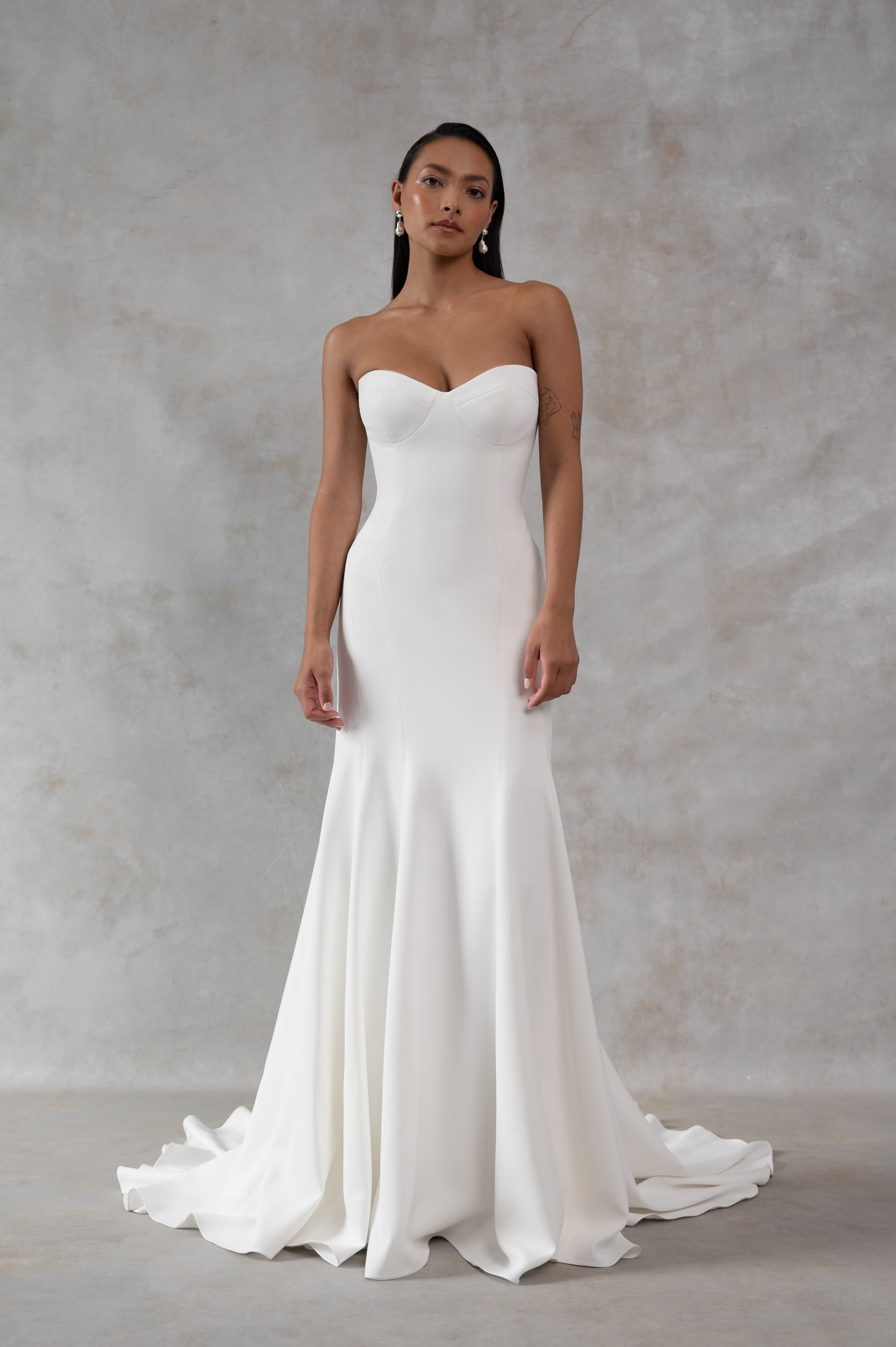
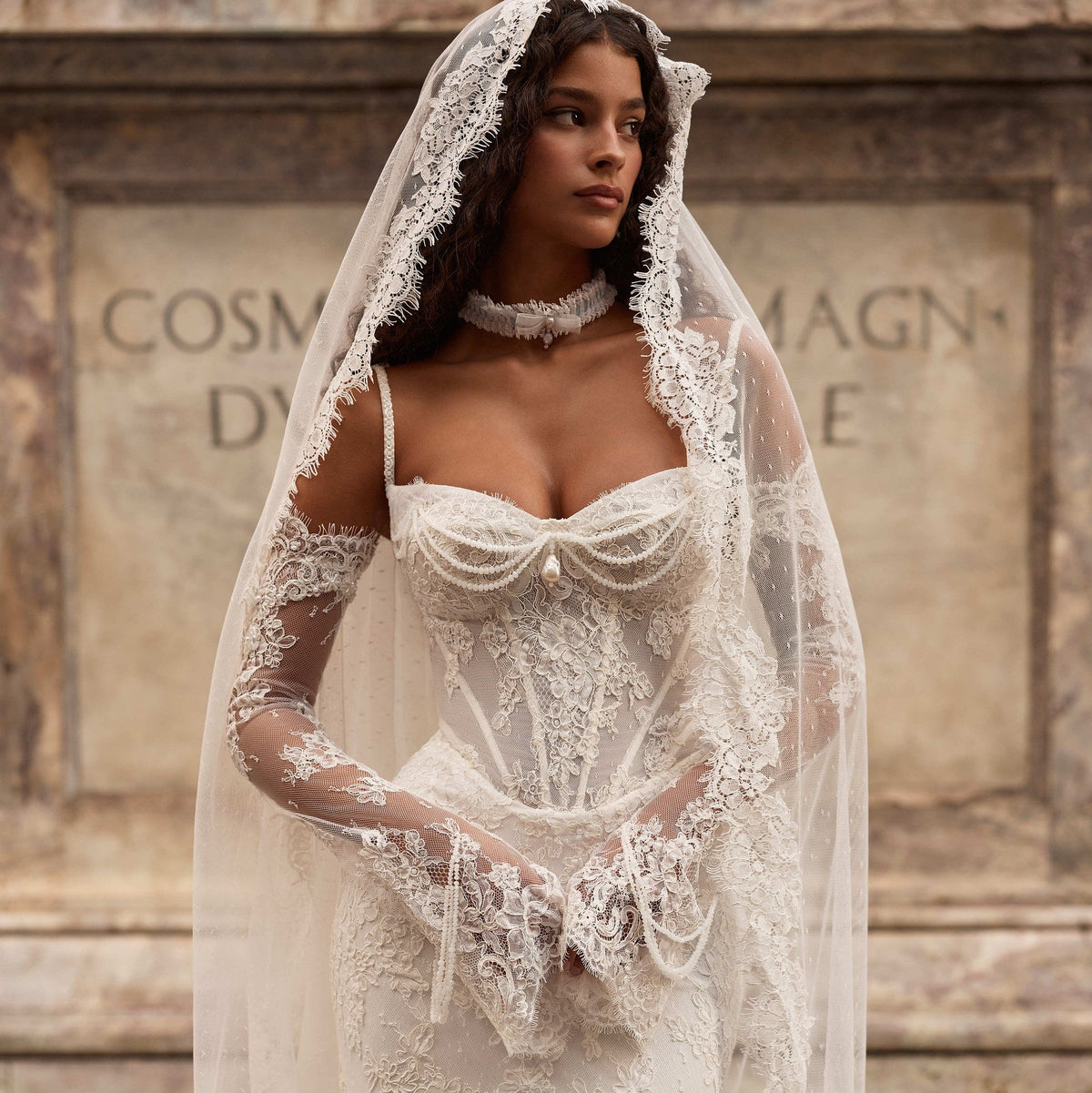

You have found a dress with a gorgeous train, and you love the way it sweeps down the aisle. Then the practical question pops up: what happens to it when the dancing starts? The answer is a bustle. It is one of the most common questions our seamstress is asked, so here is our guide to what a bustle is, the different types, and how to choose the right one for your dress.
What is a wedding dress bustle?
A bustle is a way of lifting and securing your train so it no longer trails on the floor. It is usually added during your alterations, using small hooks, buttons, loops or ribbons that gather the train up and fasten it to the back of the dress. Once it is bustled, you can walk, dance and mingle freely without anyone stepping on your hem.
Not every dress needs one. Very short trains or dresses that just skim the floor may simply be hemmed. But if your gown has any real length behind you, a bustle is usually the most comfortable solution for the evening.
The main types of bustle
Over bustle (sometimes called an American bustle): the train is lifted up and hooked onto the outside of the skirt, often at the waist or just below. It creates a soft, draped effect and works beautifully on many fabrics, including satin and tulle.
Under bustle (often called a French or Victorian bustle): the train is folded underneath and tied or fastened inside the skirt, usually with numbered ribbons. It creates a fuller, layered look at the back and suits structured or heavier gowns.
Ballroom bustle: the train is lifted so the skirt looks almost as though it was never there, giving a clean, floor length hem all the way round. It takes a little more work but the result is very polished.
Wrist loop: a simple loop sewn onto the train that slips over your wrist. It is light and quick, though it does mean holding your train for the evening, so it suits lighter fabrics and shorter trains best.
Bustle alternatives you can wear
There are also clever accessories designed to lift a train without traditional bustle points. Trainloop is a two piece design that hooks the train up without any sewing, and it comes in finishes to blend with your gown, including lace, pearl, crepe, mikado and crystal. It is a lovely option for brides who want a neat, discreet solution.
 TRAINLOOP LACETrainloop
 TRAINLOOP PEARLTrainloop
 TRAINLOOP CRYSTALTrainloop
 GLIMPSEMilla Nova
How to choose the right bustle
The best bustle depends on your fabric, the length and shape of your train, and the look you want for the evening. Delicate lace edges, heavy satin and layers of tulle all behave differently, and an experienced seamstress will look at how your dress hangs before suggesting the best option. Some trains even suit a combination, with an over bustle for the outer layer and an under bustle beneath.
It is also worth thinking about your evening. If you plan to dance all night, you will want something secure. If you are having a relaxed dinner and a few photographs, a lighter solution might be perfect.
When is a bustle added?
Bustles are normally added during your alterations, once your hem length is set, as the two go hand in hand. At Belle Lueur alterations are done in house by our head seamstress Laura at Thread & Veil, so she can advise on the best bustle for your gown and show you how it works at your fitting.
A few final tips
Have a look at your dress from behind once it is bustled, ideally in a mirror or a quick photo, so you know how it will look from your guests' point of view. If your veil is long, think about whether you will remove it before bustling. And remember a little bridal emergency kit on the day, with safety pins and a few spare hooks, can save a lot of worry.
Still choosing your dress? Browse all of our wedding dresses and bridal accessories, or read about what happens after you say yes.
Find a dress you will love dancing in
Book an appointment at our Ulverston studio to try gowns with trains of every length, and talk through alterations with our team.
Book an appointment