
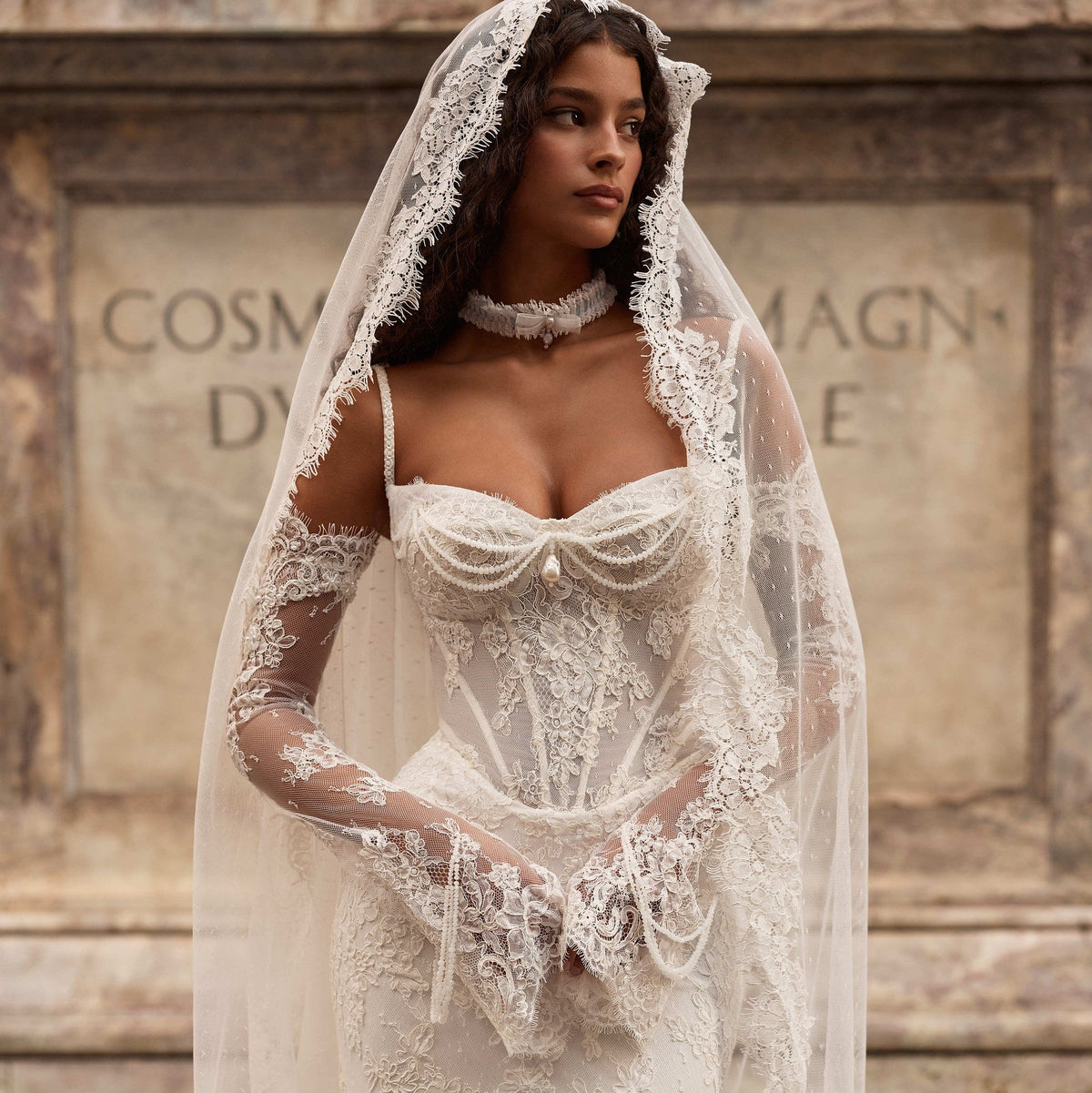

A veil is often the moment a bride really feels like a bride. But with so many lengths and styles, it can be hard to know which one is right. Here is my simple guide.
Blusher
A blusher is a short layer of tulle worn over the face as you walk down the aisle, then lifted back during the ceremony. It usually sits around chin to shoulder length. It can be worn alone or as part of a two tier veil.
Blushers are lovely if you want a traditional reveal moment. They suit almost any dress, but they look especially sweet with vintage or classic styles.
Shoulder length
A shoulder length veil just brushes the top of your shoulders. It is short, playful and a little retro. It works brilliantly with shorter dresses, tea length styles and dresses with detailed backs that you do not want to hide.
Elbow length
An elbow length veil falls to around your elbows. It is easy to wear and does not get in the way, which is why I often suggest it for brides who want a veil all day, including at the reception. It suits fitted dresses, ball gowns and anything with a detailed bodice, because it frames the waist rather than covering it.
Fingertip
The fingertip veil is one of the most popular lengths I see. It reaches your fingertips when your arms are relaxed by your sides. It is long enough to feel bridal and romantic but short enough to be practical. It works with almost every silhouette.
Waltz
A waltz veil falls somewhere between the knee and the ankle. It gives you a lovely sense of length and movement without trailing on the floor, so you can still dance in it. It is a great choice if you want something dramatic but do not want to worry about it catching underfoot.
Chapel
A chapel veil just touches the floor and extends slightly past your heels. It is elegant and very romantic, and it looks beautiful in a church. Chapel veils pair well with dresses that have a short train, or with dresses that have no train at all, because they create the effect of one.
Cathedral
A cathedral veil is the most dramatic length, extending well beyond the train of your dress. It is unforgettable in photos and suits formal weddings, long church aisles and grand country houses.
Cathedral veils do take some managing. Most brides wear them for the ceremony and photos, then take them off for the reception.
Cape veils and mantillas
A cape veil sits over the shoulders rather than in the hair, so it flows down your back like a light cape. It is modern and elegant and a great option if you want the drama of a veil but prefer not to have anything pinned in your hair. It is also beautiful with strapless or off the shoulder dresses.
A mantilla is a circular veil edged in lace that frames the face. It is traditionally worn further forward on the head, so the lace sits around your face and shoulders. Mantillas are timeless and look wonderful with simple dresses or with lace wedding dresses where the lace can echo the dress.
Matching your veil to your dress
The general rule is that the veil should complement the dress, not compete with it. A few tips from my experience:
- If your dress has a detailed back, choose a sheer veil or a shorter length so it still shows through.
- With a simple column or slip dress, a long veil or a lace edged veil can add drama and texture.
- With a full ball gown, a longer veil helps balance the volume of the skirt.
- Match the colour of the veil to your dress. Ivory, off white and champagne all vary, so bring a swatch or try it with the dress itself.
Matching your veil to your venue
The venue makes a big difference. Churches suit longer lengths like chapel and cathedral, especially with a long aisle. Country houses can carry almost any style. For barns and relaxed weddings, I often suggest fingertip, waltz or elbow length, which are easier to manage on uneven floors.
Outdoor and windy weddings in the Lakes
We are on the edge of the Lake District, so I have to mention the weather. A lakeside ceremony or a fellside photo shoot is stunning, but the wind can catch a long veil in seconds.
- Choose a softer, lighter tulle for movement, or a slightly heavier tulle if you want it to stay put.
- Secure the comb firmly into your hair and ask your hairdresser to build in a solid anchor point.
- Consider a shorter length or a cape veil for outdoor ceremonies.
- Embrace it. Some of the most beautiful wedding photos I have seen are of a veil caught in the breeze over the water.
When to buy your veil
I always recommend choosing your veil after you have chosen your dress. That way you can try them together and see how they work. It is also best to have your veil before your final fitting, so your seamstress and hairdresser can see the complete look. Take it to your hair trial too.
You can browse our bridal veils and the rest of our accessories online, but nothing beats trying them on with your dress.
Come and try your veil
As one of the largest bridal boutiques in the North of England, we have lots of veils to try alongside your dress. Book your appointment here and we will help you find the length that feels right for your day. Brides travel to us from across Cumbria, Lancashire, Yorkshire and the North East, and we would love to welcome you to Ulverston.
Jenny x